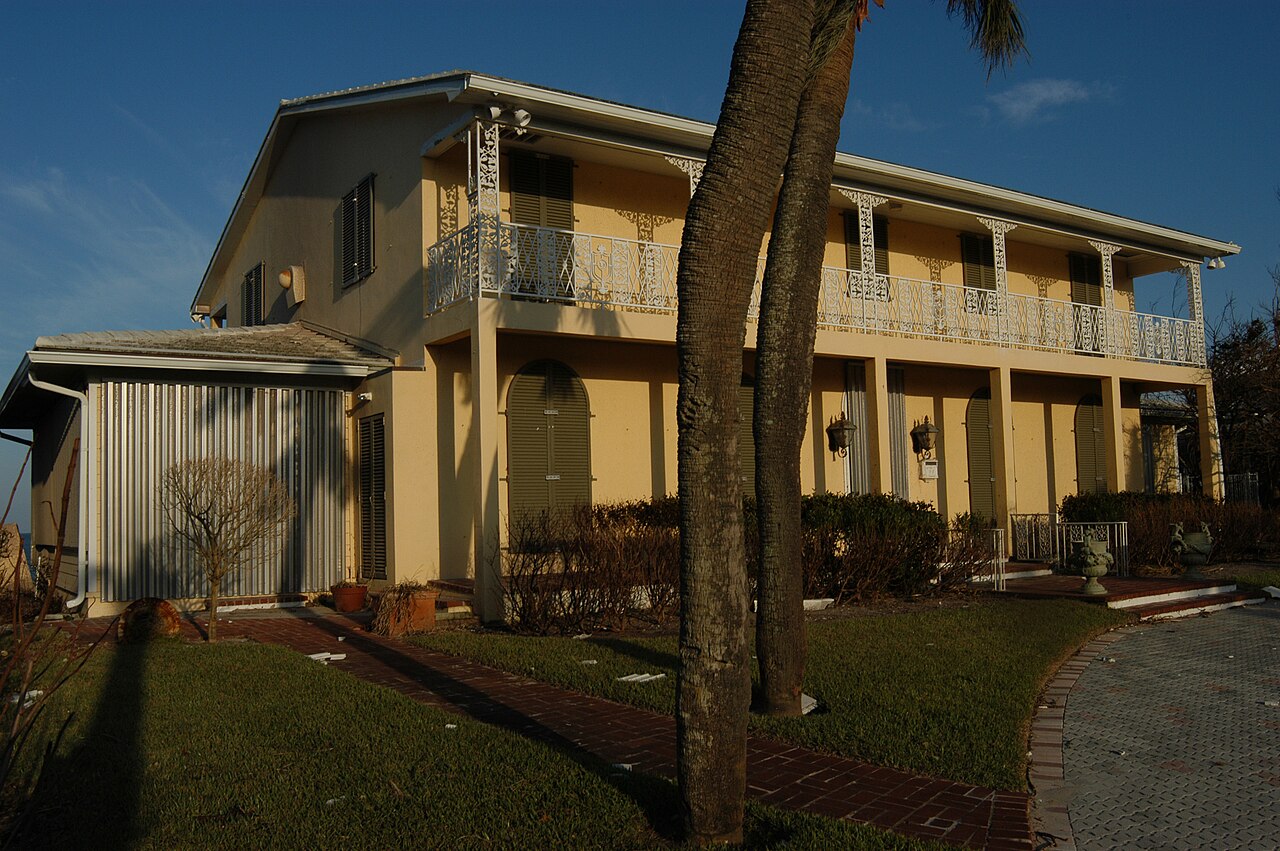
Vero Beach, Florida home protected by aluminum and wood shutters during Hurricane Jeanne, 2004. Photo: Mark Wolfe/FEMA, public domain.
Quick Answer: The 2026 Atlantic hurricane season produced 10 named storms but only one hurricane, Isaias, which made landfall near Destin on October 9 as a Category 2 storm. AccuWeather preliminarily estimated Isaias’s damage and economic loss at $16 billion to $20 billion. For Florida homeowners, the quiet season still offers lessons on roofs, windows, power and flood coverage before 2027.
For most of 2026, Florida homeowners watched an Atlantic hurricane season that refused to get going. A near-record El Niño suppressed storm development, and the basin went months without a hurricane. Then, in October, Hurricane Isaias strengthened quickly over the Gulf and struck the Panhandle, cutting power to hundreds of thousands of customers and tearing roofs from buildings.
The season runs through November 30, but forecasters say it is effectively winding down. This report reviews what happened in 2026, what Isaias showed about how homes and the power grid hold up, and what Florida homeowners and home service companies can take from the year as they plan roof, window, generator and insurance decisions for 2027.
How active was the 2026 hurricane season?
As of early November, the Atlantic had produced 10 named storms: Arthur, Bertha, Cristobal, Dolly, Edouard, Fay, Gonzalo, Hanna, Isaias and Josephine, according to AccuWeather. The 30-year average is 14 named storms, seven hurricanes and three major hurricanes, according to Nature World News, citing FOX Weather. Isaias was the only hurricane. Fay came close, peaking at 70 mph, just short of Category 1 strength.
AccuWeather reported that 10 named storms is the fewest since 2014, which had eight, and that 2026 is the first season since 1925 with only one hurricane. Accumulated cyclone energy, a measure that combines storm strength and duration, was 19.7 as of early November, about 83% below the long-term average, according to FOX10. Among seasons it compared, only 1983, at about 17.4, was lower.
2026 Atlantic season vs. average
| Measure | 2026 (early November) | 30-year average |
|---|---|---|
| Named storms | 10 | 14 |
| Hurricanes | 1 | 7 |
| Major hurricanes | Isaias peaked at Category 3 | 3 |
| Accumulated cyclone energy | 19.7 | About 83% higher |
Sources: AccuWeather; FOX10; Nature World News citing FOX Weather.
Accumulated cyclone energy, selected seasons
| Season | ACE |
|---|---|
| 1983 | About 17.4 |
| 2026 (as of early November) | 19.7 |
| 1994 | 32.0 |
| 2013 | 34.6 |
| 1997 | 40.1 |
| 2015 | 62.7 |
| 2004 (full season) | 226.9 |
Source: FOX10. Hurricane Ivan alone produced about 70.4 ACE in 2004.
Isaias accounted for about 7.2 of the season’s ACE, roughly 37% of the total, according to FOX10. For comparison, Hurricane Ivan in 2004 produced about 70.4 by itself, more than three and a half times the entire 2026 season to date.
Why was the season so quiet?
Forecasters point to El Niño. The Pacific El Niño was described as near-record, and NOAA’s Climate Prediction Center gave an 83% chance it would become the strongest since 1950, according to FOX Weather as cited by Nature World News. El Niño strengthens upper-level westerly winds over the Caribbean and tropical Atlantic, creating wind shear that tears storms apart, and it brings sinking, dry air over the tropical Atlantic.
Alex DaSilva, AccuWeather’s lead hurricane expert, said, “The 2026 Atlantic hurricane season has been anything but typical, and El Niño has played a significant role.” Phil Klotzbach, a hurricane researcher at Colorado State University, said in October, “It’s certainly been surprising to see just how quiet it has been.”
The quiet season also broke records. The Atlantic went without a hurricane through September 21, breaking a 112-year record, according to AccuWeather, and Isaias became the latest first hurricane in 121 years. Action News Jax meteorologist Mike Buresh noted on October 1 that the average date of the first Atlantic hurricane is August 11, and that only two seasons since the mid-1800s had no Atlantic hurricanes at all: 1907 and 1914.
Buresh’s climatology notes put 2026 in context. The peak of hurricane season is September 10, and the average date of the ninth named storm is September 9. Going without an Atlantic hurricane through September 11 was a record for the satellite era, which began in 1966. Fay, a weak storm, was the season’s longest-lasting Atlantic cyclone at about nine days, cycling between depression, tropical storm and post-tropical status several times. Josephine, the 10th named storm, formed on October 21.
How forecasts changed in 2026
| Forecast | Named storms | Hurricanes | Major hurricanes |
|---|---|---|---|
| AccuWeather, March | 11 to 16 | n/a | n/a |
| AccuWeather, mid-August | 8 to 11 | 3 to 4 | 1 to 2 |
| Actual, early November | 10 | 1 | 1 peak at Category 3 |
Source: AccuWeather.
What happened when Isaias hit Florida?
Isaias formed in early October and rapidly strengthened over the Gulf to a major hurricane, peaking at Category 3 with sustained winds of about 120 mph. It weakened slightly before making landfall near Destin at about 8:30 p.m. Central Daylight Time on Friday, October 9, as a Category 2 hurricane with 105 mph sustained winds, according to the National Weather Service in Mobile as reported by Nature World News.
The storm’s effects were severe along the Panhandle. AccuWeather reported a 117 mph wind gust at Oriole Beach, a storm surge of 5.51 feet at Panama City Beach, more than 8 inches of rain in parts of the Panhandle and more than 20 tornadoes. Nature World News reported surge of nearly 4 feet above the high-tide line at Old Pass Lagoon in Destin and said winds tore roofs and facades from hotels and apartments. Nearly 900,000 customers lost power in the first hours.
Reported deaths vary by source. The Associated Press counted at least four deaths in Florida and Alabama, as cited by Nature World News, while AccuWeather reported as many as eight deaths from indirect impacts. AccuWeather preliminarily estimated Isaias’s total damage and economic loss at $16 billion to $20 billion.
One lesson from Isaias is how little warning a rapidly strengthening storm can give. Isaias became the season’s first hurricane on October 8, according to AccuWeather, and made landfall near Destin the next evening after strengthening to a major hurricane over the Gulf. Homeowners in the Panhandle had little time to install shutters, secure outdoor items or arrange generator fuel, which is why preparation done before a storm forms matters more than last-minute efforts.
Isaias timeline
| Date | Event |
|---|---|
| Early October | Isaias forms as a tropical storm |
| October 8 | Becomes the season’s first hurricane, the latest first hurricane in 121 years |
| October 8 to 9 | Rapidly strengthens to Category 3 over the Gulf |
| October 9, about 8:30 p.m. CDT | Landfall near Destin as a Category 2 |
| First hours after landfall | Nearly 900,000 customers lose power |
Sources: AccuWeather; Nature World News.
Hurricane Isaias by the numbers
| Measure | Figure |
|---|---|
| Peak intensity | Category 3, about 120 mph |
| Florida landfall | Near Destin, Oct. 9, Category 2, 105 mph |
| Highest reported gust | 117 mph, Oriole Beach |
| Peak storm surge reported | 5.51 feet, Panama City Beach |
| Rainfall | More than 8 inches in parts of the Panhandle |
| Tornadoes | More than 20 |
| Customers without power, first hours | Nearly 900,000 |
| Damage and economic loss (preliminary) | $16 billion to $20 billion (AccuWeather) |
Sources: AccuWeather; Nature World News citing NWS Mobile, AP and FOX Weather.
Did other 2026 storms affect Florida’s economy?
Isaias was not the only costly storm. AccuWeather estimated that Tropical Storm Arthur caused $4 billion to $6 billion in total damage and economic loss. Together with Isaias, AccuWeather’s preliminary estimates for the two storms add up to roughly $20 billion to $26 billion, based on its figures, despite the season’s low overall activity.
The quiet Atlantic contrasted with the Pacific. AccuWeather reported that the eastern and central Pacific had 24 named storms and 13 hurricanes as of November 3, and Nature World News reported that eastern Pacific hurricanes Polo and Simon reached Category 5 and Category 4 before affecting Mexico, while the western Pacific produced seven super typhoons. The same El Niño pattern that suppresses Atlantic storms tends to favor Pacific activity.
2026 storm damage estimates
| Storm | Type | Estimated damage and economic loss |
|---|---|---|
| Isaias | Hurricane, Florida Panhandle landfall | $16 billion to $20 billion |
| Arthur | Tropical storm | $4 billion to $6 billion |
| Combined | n/a | About $20 billion to $26 billion |
Source: AccuWeather preliminary estimates. Combined range calculated.
What did Isaias show about power restoration?
Florida Power & Light’s response to Isaias offered data on how grid investments perform. In its third-quarter 2026 earnings release, NextEra Energy said FPL mobilized about 17,000 restoration workers from 29 states and restored power to more than 97% of affected customers. The company said smart-grid technology avoided about 140,000 outages and that underground power lines performed about 14 times better than overhead lines.
For homeowners, that underground performance gap is relevant when communities and utilities consider burying neighborhood lines. It also explains why many homeowners consider backup generators even in areas with strong restoration records: restoration takes time, and outages can last days in the hardest-hit areas. Standby generators should be installed by licensed contractors with permits, and portable generators should always be run outdoors and away from windows to avoid carbon monoxide poisoning. A professional service visit before the next season can confirm that a generator will start when it is needed.
FPL storm response to Isaias
| Measure | Figure |
|---|---|
| Restoration workers mobilized | About 17,000 from 29 states |
| Affected customers restored | More than 97% |
| Outages avoided by smart-grid technology | About 140,000 |
| Underground vs. overhead line performance | About 14 times better |
Source: NextEra Energy Q3 2026 earnings release.
What should Florida homeowners do before 2027?
A quiet season can lead to complacency, but Isaias showed that a single storm can cause billions of dollars in damage. The months between seasons give homeowners time to plan repairs and upgrades without a storm on the horizon.
Key steps include having a licensed contractor inspect the roof and repair loose or damaged shingles and flashing; checking that hurricane shutters or impact windows and doors are in good condition and that shutters can be installed quickly; trimming trees and removing dead limbs near the house; servicing standby or portable generators and testing transfer switches; and reviewing homeowners and flood insurance before the next season. Nature World News noted that National Flood Insurance Program policies generally take 30 days to take effect, so coverage should be arranged well before a storm threatens.
Buresh also offered a practical reminder: “Taping windows is not recommended & will not keep glass from breaking.” Proper shutters or impact-rated glass are the effective options.
Off-season home hardening checklist
| Area | What to review |
|---|---|
| Roof | Inspection by a licensed roofer; repair shingles, tiles and flashing |
| Openings | Shutters, impact windows and garage doors in working order |
| Trees | Trim limbs near the home and power lines |
| Power | Service generators; test transfer switches |
| Insurance | Review wind and flood coverage; flood policies generally take 30 days |
Why do hurricane names matter to Florida homeowners?
Atlantic storm names repeat on a six-year cycle, and the 2026 list was last used in 2019, Buresh noted. Names are retired after especially deadly or destructive storms. Recent retirements include Florence and Michael from 2018, Dorian from 2019, Laura, Eta and Iota from 2020, Ida from 2021, Fiona and Ian from 2022, Beryl, Helene and Milton from 2024 and Melissa from 2025, and several of those storms struck Florida. Whether Isaias joins that list will be decided by the World Meteorological Organization after the season.
Brian’s Take
A quiet season is not a safe season. In 2026 we had just one hurricane all year, and it still did an estimated $16 billion to $20 billion of damage when it came ashore near Destin.
The number that stuck with me is from FPL: underground lines performed about 14 times better than overhead lines during Isaias. That is the kind of hard data homeowners and communities should weigh when they think about storm hardening.
My advice is simple and not complicated: use the quiet months to check your roof, your shutters and your insurance. The next season will not wait for you.
Frequently Asked Questions
How many hurricanes were there in 2026?
One, Hurricane Isaias, out of 10 named storms as of early November.
Where did Hurricane Isaias make landfall in Florida?
Near Destin on October 9, 2026, as a Category 2 hurricane with 105 mph winds.
Why was the 2026 hurricane season so quiet?
A near-record El Niño increased wind shear and brought dry, sinking air over the tropical Atlantic.
How much damage did Isaias cause?
AccuWeather preliminarily estimated $16 billion to $20 billion in damage and economic loss.
When does hurricane season end?
The Atlantic hurricane season runs from June 1 to November 30.
How long does flood insurance take to start?
National Flood Insurance Program policies generally take 30 days to take effect, so homeowners should buy coverage well before a storm threatens.
Sources and Further Reading
- AccuWeather, “2026 Atlantic Hurricane Season Is Over,” November 9, 2026
- FOX10, “2026 Atlantic Hurricane Season Among Least Active When Measured by ACE,” November 4, 2026
- Nature World News, “Atlantic Has Produced Just One Hurricane in 2026,” November 4, 2026
- Action News Jax, Talking the Tropics with Mike Buresh, October 1, 2026
- NextEra Energy, Third Quarter 2026 Financial Results, October 21, 2026