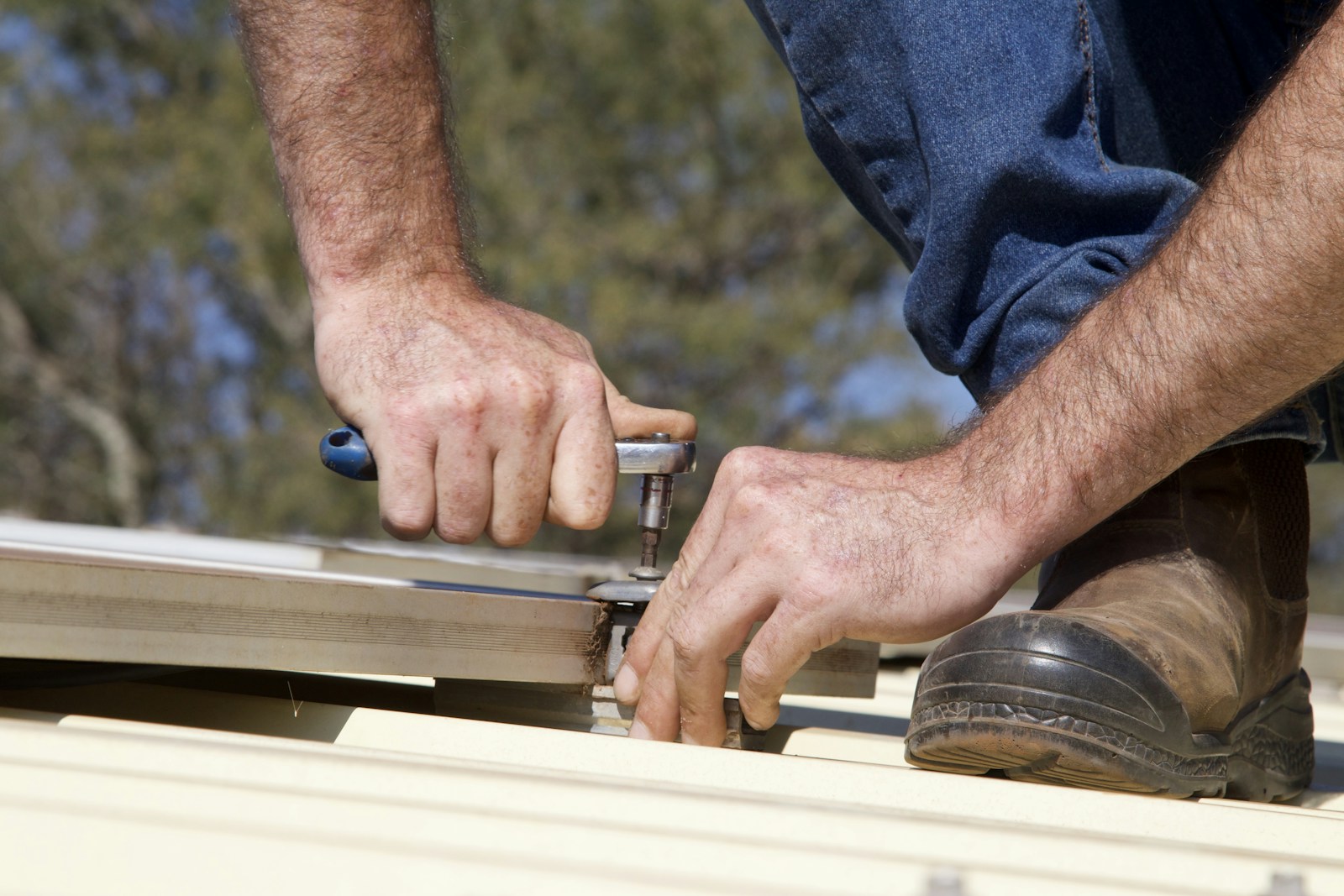
Source: Sergio Martins via Unsplash, Unsplash License
Quick Answer: Since 2022, Florida lawmakers have put about $833.8 million into My Safe Florida Home. By October 2025 the program had paid $384.5 million in grants of up to $10,000 each to 40,719 homeowners, and most of that money went to roofers, window and door installers and other licensed mitigation contractors. The Legislature added no new money for 2026-27, but the budget carries forward $378 million in unspent funds. A 2026 law also tightened eligibility and deadlines, which changes how contractors can plan their pipelines.
My Safe Florida Home (MSFH) grants go to homeowners as reimbursements, but nearly every dollar ends up as revenue for a licensed contractor who replaced a roof, installed impact windows or doors, or strengthened roof-to-wall connections. This article follows the money and the newest rules.
How much money has Florida put into My Safe Florida Home?
The Legislature revived the program in 2022 as property insurance costs climbed. According to The Capitolist, the program completed 16,724 mitigation inspections and approved 2,979 grant applications between May 2022 and February 2023. Demand quickly outpaced the money, producing a backlog of more than 17,000 applications by late 2023. Under the 2024 funding bill, SB 7028, the Department of Financial Services (DFS) would stop taking applications once money ran out rather than keep a waiting list.
The 2025 Legislature provided $280 million; Gov. Ron DeSantis had requested about $600 million, WUSF reported. Before the portal reopened on Aug. 4, 2025, DFS added funds from roughly 7,200 previously awarded grants that homeowners had let expire, which brought the 2025 round to $352 million. Steven Fielder, DFS chief business officer, told WUSF that about $329 million of that was set aside for grants and a little over $5 million for inspections, with the rest for administration. He estimated the round could serve up to 33,000 homeowners.
What does the program’s funding history look like at a glance?
| Date | Milestone | Figure |
|---|---|---|
| May 2022 to Feb. 2023 | First phase of revived program | 16,724 inspections; 2,979 grants approved |
| Nov. 2023 | Senate approves backlog funding | $176 million; 17,000+ applications waiting |
| March 2024 | SB 7028 passes the Legislature | $200 million added |
| March 2025 | Senate President’s update | $576 million for grants; 58,796 grants obligated |
| Aug. 4, 2025 | Portal reopens | $352 million ($280 million new plus expired grants) |
| Oct. 2025 | DFS testimony to House subcommittee | $384.5 million paid of $833.8 million allocated |
| July 1, 2026 | 2026-27 budget takes effect | $378 million in unused funds carried forward; no new appropriation |
How much has actually reached homeowners and contractors?
The gap between money appropriated and money paid is the main thing contractors need to understand about MSFH. Fielder’s October 2025 testimony, as reported by the Sun-Sentinel, gave these funnel numbers:
- About 122,057 homeowners had received free initial inspections.
- 63,073 grant applications had been approved.
- About 56,984 people who were inspected never asked for grant approval.
- 43,003 projects had reached final inspection, and 2,284 of those were waiting for payment.
- 40,719 homeowners had been paid grants of up to $10,000 each.
- $384.5 million had been reimbursed.
That means roughly one in three inspected homeowners had collected a grant. It also means about 46% of allocated dollars had gone out the door. Dividing $384.5 million by 40,719 recipients gives an average of about $9,440 per paid grant, close to the $10,000 cap. In other words, most paid projects used nearly the full state share.
The pipeline is long: in roughly ten weeks after the August 2025 reopening, 12,394 homeowners received initial inspections, but only 1,514 had been reimbursed.
Which trades capture the most grant dollars?
Under section 215.5586 of the Florida Statutes, grants can pay for opening protection (exterior doors, garage doors, windows and skylights), stronger roof-to-wall connections, better roof-deck attachment and secondary water resistance for the roof. Roof work has taken a large share. Citing a report to a House budget subcommittee, Insurance Journal reported in March 2026 that about $136 million, roughly a third of the almost $400 million paid on more than 41,000 grants, went to roof coverings and secondary membranes.
How does the money flow to a contractor?
MSFH is a reimbursement program, not a contractor-payment program. The program’s contractor guide says DFS is not involved in contractor selection, construction or payment, and keeps no list of authorized contractors. Since July 1, 2024, homeowners have been free to choose any eligible Florida contractor licensed by the Department of Business and Professional Regulation in one of five categories: general, building, residential, specialty or roofing. The guide also stresses that the program pays only for improvements recommended in an MSFH inspection.
Under the statute, the grant application must name the intended contractor and that contractor’s state license number. DFS must electronically verify that the license is accurate and current before approving the grant. The work must also be done under all required local permits and inspections. The Sun-Sentinel noted that neither the statute nor the program website allows for paying contractors in advance or in installments. Homeowners pay the contractor and then seek reimbursement. Fielder told WUSF that homeowners often cover the gap with contractor financing or a short-term credit union loan.
What does the match requirement mean for closing a sale?
Low-income homeowners, those at or below 80% of the county median income, can receive up to $10,000 with no match. Moderate-income homeowners, those below 120% of the county median, get $2 from the state for every $1 they spend. To get the full $10,000, they must put in $5,000. Starting with the 2025 round, homeowners above the moderate-income line can no longer get grants, and every applicant must show proof of homeowners insurance.
Fielder told lawmakers some applicants got quotes and found they could not cover their match, and described low-income applicants facing roof bills of $12,000 to $13,000 against a $10,000 grant. He called limited funding probably the biggest barrier.
What is the status of My Safe Florida Home in 2026?
The 2026 Legislature did not add new money. WPTV reported on May 8, 2026 that lawmakers were not proposing new funding and that leftover money from the prior year would keep grants flowing. Florida Realtors reported that the 2026-27 state budget, effective July 1, 2026, carries forward $378 million in unused My Safe Florida Home funding and $27 million in unused funding for the My Safe Florida Condominium program.
Lawmakers did rewrite the program’s rules. CS/CS/CS/SB 1452, a broad Department of Financial Services bill enacted as Chapter 2026-174, Laws of Florida, amended section 215.5586. The Senate bill summary lists these changes:
- Home types: Eligible homes must be single-family units on their own parcels. Detached homes and attached homes of three stories or less qualify.
- Applicants: Applicants must be low- or moderate-income. Priority goes first to low-income applicants aged 60 or older, then to moderate-income applicants aged 60 or older.
- Home age: A home’s age is now based on the construction date in property appraiser records rather than the initial permit date. The earlier statute required a permit application before Jan. 1, 2008.
- Approved work only: Only improvements recommended in both the initial and final inspection reports are eligible.
- Application deadline: Homeowners must apply for a grant within 24 months of the initial inspection. The goal is to clear out inactive files.
- Construction deadline: Approved work must be finished within 18 months with no extension request needed. Before the change, homeowners had one year plus an optional six-month extension.
- Roof coverings: Grant money may pay for a roof covering when it is needed to complete approved secondary water resistance work.
- Abandonment notice: DFS must notify applicants at least five business days before treating an application as abandoned.
Why do the new deadlines matter for contractor scheduling?
The 18-month window gives contractors a firm completion date without a separate extension request. The 24-month rule puts long-inspected homeowners who never applied on a clock, so quiet files are more likely to be closed. These rules reward contractors who keep stalled jobs moving.
Do MSFH upgrades actually lower insurance premiums?
The program is sold partly as a way to cut premiums, and the statute requires DFS to estimate average and total annual premium discounts in its annual report, due to legislative leaders by Feb. 1. The results so far are mixed. Fielder told House members in October 2025 that 20,995 grant recipients saw their premiums fall after the work, while 17,674 saw no change or an increase. That works out to about 54% of recipients who reported a decrease. Fielder said some in the second group joined after insurers threatened cancellation.
Roof grants have drawn the most criticism. Insurance Journal reported that Rep. Brian Hodgers, R-Viera, one of two insurance agents in the Legislature, analyzed insurer data and found an average annual premium discount of $18 after new roofs were installed. He said most Florida insurers give only minimum credits for new roofs. “An old roof is a maintenance item, not an insurance matter,” Hodgers said. His HB 1359 would have limited roof grants to roofs that fail the state building code. The bill saw little action. Hodgers has argued for moving money toward impact-resistant windows and doors and roof-to-wall connections.
What verification risks do roofers face?
Program rules require either a self-adhering membrane across the whole roof deck or taped seams plus felt or a similar underlayment. Inspectors told Insurance Journal that a secondary water barrier is hard to confirm once the roof covering is on. The program encourages, but does not require, photos taken during the work. If a home fails its final inspection, there is no third inspection and the grant is voided. Homeowners can lose up to $10,000. Mike Silvers, director of technical services at the Florida Roofing and Sheetmetal Contractors Association, warned that contractors could face lawsuits from homeowners who lose their grants.
The Office of Insurance Regulation (OIR) updated the Uniform Mitigation Verification Inspection Form effective April 1, 2026. The new form asks what type of secondary membrane a roof has (self-adhering underlayment, taped seams, or double-layer felt or synthetic) and lets inspectors mark it as missing or unknown. That gives roofers a practical reason to photograph underlayment work on grant-funded jobs.
What does the program mean for Florida contractors heading into 2027?
- The money is real but slow. Payment depends on homeowners finishing work, passing final inspection and requesting reimbursement.
- The customer pool is narrower. Since 2025, grants have been limited to low- and moderate-income homesteaded owners, with seniors first in line. Those households are the least able to front project costs or cover a match.
- Roof funding is under political pressure. Critics question the insurance benefit, and the 2026 law ties roof-covering payments to secondary water resistance work.
- Documentation protects revenue. With no third inspection and a revised OIR form that singles out secondary membranes, photo records and clean contracts reduce the chance of a voided grant and a customer dispute.
Insurance Journal reported that insurers, the governor and homeowners support the program. Former state Sen. Jeff Brandes proposed in August 2025 to eliminate the sales tax on roof replacements instead, WPTV reported.
Key facts snapshot
| Maximum state grant | $10,000 |
|---|---|
| Match (moderate income) | $1 homeowner per $2 state; $5,000 for the full grant |
| Insured value cap | $700,000 (2025 statute) |
| Paid to homeowners | $384.5 million to 40,719 recipients (Oct. 2025) |
| Share to roof coverings and membranes | About $136 million, roughly one-third |
| 2026-27 carryforward | $378 million (homes); $27 million (condominiums) |
| Contractor license categories accepted | General, building, residential, specialty, roofing |
Frequently Asked Questions
Does My Safe Florida Home pay contractors directly?
No. The homeowner pays the contractor, and the program reimburses the homeowner after the work passes final inspection. DFS says it is not involved in contractor selection, construction or payment.
Does a contractor need to register with the program?
The program keeps no list of authorized contractors. The homeowner’s grant application must name the contractor and the contractor’s Florida license number, and DFS verifies the license electronically before approving the grant.
How long does a homeowner have to finish the work?
Under the 2026 changes in SB 1452, approved improvements must be completed within 18 months, with no extension request required. Homeowners must also apply for a grant within 24 months of their initial inspection.
Can grants pay for a new roof?
Under the 2026 law, grant money may pay for a roof covering when it is needed to complete approved secondary water resistance work. Townhouse grants were previously limited to opening protection.
Sources and Further Reading
- Section 215.5586, Florida Statutes (2025), My Safe Florida Home Program — The Florida Senate
- Bill Summary, CS/CS/CS/SB 1452 (2026), Department of Financial Services — The Florida Senate
- Chapter 2026-174, Laws of Florida — Florida Department of State
- Update on the My Safe Florida Home Program (memo, March 26, 2025) — Office of the Florida Senate President
- Contractors Guide — My Safe Florida Home Program, Florida Department of Financial Services
- Only a third of My Safe Florida Home applicants got their grant, program official says — South Florida Sun-Sentinel
- Update: Florida’s Home Hardening Plan Is Massive, Popular—and Flawed, Critics Say — Insurance Journal
- My Safe Florida Home reopens with $352M in funds and new eligibility requirements — WUSF
- Applications reopen for My Safe Florida Home program with $280M in funding — Florida Politics
- My Safe Florida Home program has money left from last year to keep grants flowing in 2026 — WPTV
- Fresh state budget targets housing supply, assistance — Florida Realtors
- My Safe Florida Home funding heads to DeSantis — The Capitolist