By Brian French | Florida Home Services News | October 8, 2026
Quick Answer
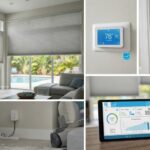
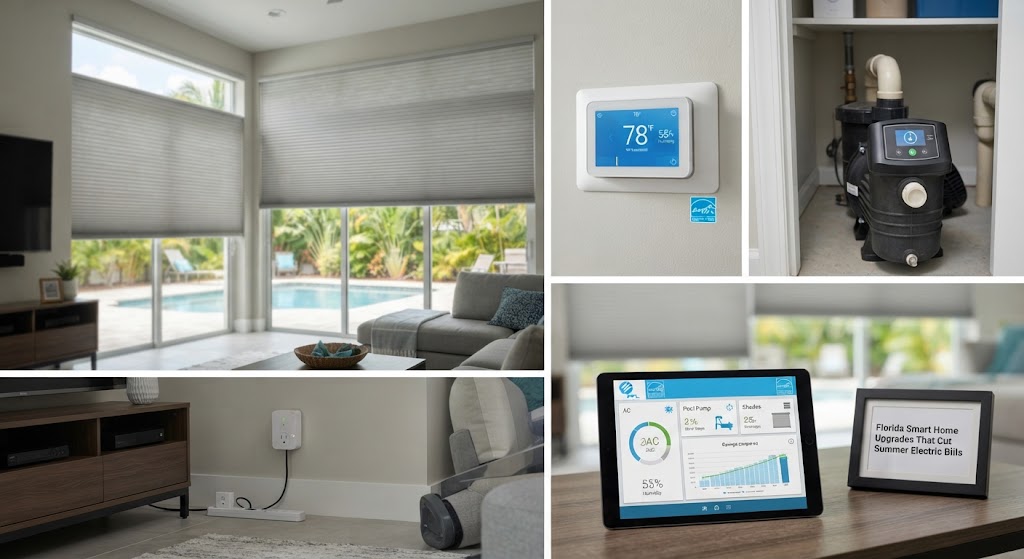
The highest-return smart upgrades for Florida homes are an ENERGY STAR smart thermostat, automated shades on sun-facing windows, and a programmed variable-speed pool pump. Together they target the three biggest summer loads: air conditioning, solar heat gain, and pool circulation.
Why Florida Electric Bills Spike in Summer
In Florida, the summer electric bill is mostly an air conditioning bill. Long cooling seasons, high humidity, intense sun, and backyard pools all stack up, and many homes blow past the usage levels utilities use as their benchmark.
The benchmark itself is rising. For 2026, FPL’s typical 1,000-kWh residential bill in most of Florida rose about 2%, from $134.14 to $136.64. Many households use more than that. Florida’s average residential bill in 2024 was $156.09 on 1,104 kWh, according to EIA data. Usage above the 1,000-kWh mark also costs more: on FPL’s rate structure, a kilowatt-hour above 1,000 costs about 14 cents once riders stack up, while the first block runs closer to 12.
That makes summer the season where smart automation pays off fastest.
ROI at a Glance: Florida Smart Upgrades
| Upgrade | What It Targets | Expected Savings | Upfront Cost |
|---|---|---|---|
| Smart thermostat | AC runtime | ~8% of heating/cooling | Low |
| Automated shades | Window heat gain | Up to 60% of window solar heat | Moderate to high |
| Variable-speed pool pump | Pump energy | 30–70% of pump energy | $900–$1,400 installed |
| Smart plugs and timers | Standby loads | Small but steady | Very low |
Savings vary by home, habits, and equipment. Figures from ENERGY STAR, DOE, and industry sources cited below.
1. Smart Thermostats: Manage Temperature and Humidity
A smart thermostat is the cheapest, fastest win in a Florida home. ENERGY STAR reports average savings of about 8% of heating and cooling bills for certified smart thermostats, with greater savings possible depending on climate, comfort preferences, occupancy, and equipment. Manufacturers report higher numbers: Google says the Nest Learning Thermostat saves 10% to 12% on heating and 15% on cooling.
Florida-Specific Settings
The Florida twist is humidity. A thermostat set too high or too aggressive in “away” mode can let moisture build up, which leads to mold and musty odors. Most guidance targets indoor relative humidity between 45% and 55%, with problems starting above 60%.
| Setting | Recommendation |
|---|---|
| Home (summer) | 76–78°F |
| Away (short trips) | 78–82°F, never off |
| Indoor humidity | 45–55%, below 60% |
| Fan | AUTO, not ON |
FPL estimated that raising the thermostat from 75 to 78 degrees in August could save 42 cents a day, or $12.60 a month in cooling costs. Use AUTO, not ON, for the fan to prevent moisture from re-evaporating into the home.
What to Look For
Choose an ENERGY STAR-certified model with a built-in humidity sensor, remote room sensors for hot rooms, and a dehumidification or “overcool” setting if your AC system supports it. Confirm compatibility with your HVAC system before buying.
Get Paid to Participate
Utilities often reward smart thermostat owners. Utility programs through FPL, Duke Energy Florida, TECO, and JEA offer smart thermostat rebates of $75–$100, and FPL’s OnCall demand response program gives bill credits worth $50–$100 a year for allowing FPL to cycle AC during peak demand. Check current terms with your utility.
2. Motorized Smart Shades: Block Heat Before It Enters
Windows are one of the biggest sources of unwanted heat in a Florida home. According to the U.S. Department of Energy, heat gain and loss through windows account for 25 to 30% of residential heating and cooling energy use. Standard double-pane windows with no covering let 76% of the sun’s energy into a room.
The DOE reports that well-fitted cellular shades can reduce unwanted solar heat through windows by up to 60%. Smart management of window coverings can reduce heat gain by up to 77%, the DOE says.
Why Automation Matters
Manual shades only work if someone closes them at the right time. Motorized shades can follow a schedule or sun-tracking automation, closing west-facing windows during the afternoon peak even when no one is home. That is when Florida homes absorb the most heat and when the AC works hardest.
Where to Start
Prioritize west- and south-facing windows, especially in living areas and bedrooms that run hot. You do not need to automate every window. A few strategic rooms capture most of the benefit.
3. Variable-Speed Pool Pumps: The Overlooked Energy Hog
For Florida homes with pools, the pump is often the second-largest electric load after air conditioning, and it runs year-round.
Federal Rules Already Favor Efficiency
Federal standards that took effect July 19, 2021 require most self-priming pool filter pumps at or above 0.711 hydraulic horsepower to meet a level that effectively calls for variable speed. If your old single-speed pump fails, your replacement will almost certainly be variable speed.
The Savings Math
DOE guidance puts the savings at 30 to 70 percent of pump energy use a year when a variable-speed pump replaces a single-speed model. One Florida example estimates a 1.5 HP single-speed pump costs about $83 a month to run versus about $25 for a variable-speed pump, saving roughly $696 a year. With a typical installed cost of $900 to $1,400, payback can come within 12 to 18 months.
Program It Right
The savings depend on programming. A common mistake is running a variable-speed pump at full speed for 8 hours a day, a legacy single-speed habit. Pair the pump with a smart pool controller or app scheduling so it runs at low speed most of the day and ramps up only for cleaning, heating, or water features.
4. Smaller Smart Wins
- Smart plugs: Cut standby power to entertainment centers, game consoles, and home office gear on a schedule.
- Water heater timers or smart controllers: Avoid heating water when the household is asleep or away.
- Ceiling fan automation: Fans cool people, not rooms. Automate them to turn off when rooms are empty.
- Energy monitoring: A whole-home energy monitor shows which devices drive your bill, so you can target upgrades with real data.
Brian’s Take
From an investment standpoint, smart home upgrades in Florida are best judged the way you would judge any capital expenditure: by payback period and risk. The smart thermostat is the clear first move because the cost is low, savings are independently verified, and utilities may pay you to install one. The variable-speed pool pump is the highest dollar return for pool owners, and the federal standard has already made it the default replacement.
Smart shades are the most interesting long-term play. They attack the problem at the source by keeping heat out instead of paying to pump it out. The upfront cost is higher, so start with the hottest west-facing rooms and expand only if you see results.
One warning for Florida homeowners: do not over-optimize for temperature alone. An aggressive away setting that saves a few dollars but pushes indoor humidity above 60% can cost far more in mold remediation. In this climate, the goal is managing heat and moisture together.
Frequently Asked Questions
How can I lower my electric bill in Florida during the summer?
Start with your AC: install an ENERGY STAR smart thermostat, set it around 78°F when home, and keep the fan on AUTO. Then block window heat with shades on west- and south-facing windows, and switch to a properly programmed variable-speed pool pump if you have a pool.
What are the best smart home devices for humid climates?
Smart thermostats with built-in humidity sensors and dehumidification settings, smart dehumidifiers for problem areas, and automated shades. Look for devices that manage moisture, not just temperature.
How much does a smart thermostat save in Florida?
ENERGY STAR-certified smart thermostats save about 8% of heating and cooling bills on average. Savings can be higher in hot climates where AC runs most of the year.
Is a variable-speed pool pump worth it in Florida?
Usually yes. DOE estimates savings of 30% to 70% of pump energy, and Florida pumps run year-round. Payback often comes within one to two years.
What temperature should I set my AC in Florida when I’m away?
Around 78°F to 82°F for short absences. Never turn the AC off, because humidity can climb quickly and create mold risk.
Do smart shades really save energy?
Yes, when used on sun-facing windows. The DOE reports cellular shades can reduce unwanted solar heat through windows by up to 60%, and automation ensures they close during peak sun.
Sources and Further Reading
- FPL Rate Agreement Approved — FPL Newsroom: https://newsroom.fpl.com/2025-11-20-Florida-regulators-approve-FPL-rate-agreement-that-keeps-customer-bills-low,-meets-needs-of-growing-state
- FPL Rates and the RS-1 Tariff, Decoded — Solar Learning Lab: https://www.solarlearninglab.com/utilities/fpl/
- Smart Thermostats FAQs — ENERGY STAR: https://www.energystar.gov/products/heating_cooling/smart_thermostats/smart_thermostat_faq
- Switch to a Smart Thermostat and Save — FirstEnergy: https://www.firstenergycorp.com/newsroom/featured_stories/switch-to-a-smart-thermostat-and-save.html
- Humidistat Settings for Florida: 2026 Guide — Lucas Air: https://lucasair.com/humidistat-settings-for-florida-your-2026-guide/
- Save Money Setting Your Summer Thermostat to 78 Degrees? — Yahoo News: https://news.yahoo.com/save-money-setting-summer-thermostat-134445161.html
- How to Reduce Humidity in Your House with AC — BulletProof Air: https://bulletproofair.com/blogs/news/how-to-reduce-humidity-in-your-house-with-ac-a-florida-homeowner-s-guide-2026
- Florida Energy Rebates 2026 — Energy Rebate Calculator: https://energyrebatecalculator.com/blog/florida-energy-rebates-2026
- Save Money This Summer With Energy-Efficient Shades — Blindster: https://www.blindster.com/blog/save-money-this-summer-with-insulating-energy-efficient-shades
- How to Use Window Coverings for Energy Efficiency — Palmetto: https://palmetto.com/home-electrification/how-window-coverings-affect-energy-efficiency
- Block the Sun and Lower Your Energy Costs — Consumer Reports: https://www.consumerreports.org/home-garden/energy-efficiency/beat-the-heat-with-window-coverings-a9364047186/
- Variable Speed Pool Pump: Savings and Sizing in Florida — Southern Pool Designs: https://southernpooldesigns.com/variable-speed-pool-pump/
- Pool Pumps Explained: Single, Dual, and Variable-Speed — Florida’s Best Pools: https://floridasbestpools.com/training/library/equipment/pool-pumps-variable-speed
- Variable Speed Pump Service: Programming and Efficiency Settings — Pool Tech Tips: https://pooltechtips.com/variable-speed-pump-service-settings/
- Energy Conservation Standards for Dedicated Purpose Pool Pump Motors — Federal Register: https://www.federalregister.gov/documents/2023/09/28/2023-20343/energy-conservation-program-energy-conservation-standards-for-dedicated-purpose-pool-pump-motors