By Brian French | Florida Home Services News | October 6, 2026
Quick Answer
Drywood termites live inside dry wood and leave piles of tiny six-sided pellets. Subterranean termites live in soil and build mud tubes. Drywood infestations are treated with spot treatments or tent fumigation; subterranean termites are treated with soil termiticides or bait systems.
Why Termite Type Matters in Florida
Florida faces more termite pressure than almost any other state, and getting the species wrong means paying for the wrong treatment. Drywood termites that live inside wood are treated with whole-structure fumigation, heat, or localized wood treatments, not with a soil treatment. The reverse is also true: subterranean termites cannot be controlled with drywood methods such as fumigation or heat, because the reproductives and most of the colony remain in or near soil.
The first step is always identification. The good news is that the two groups leave very different evidence.
Spot the Difference: Drywood vs. Subterranean
| Sign | Drywood Termites | Subterranean Termites |
|---|---|---|
| Where they live | Inside dry, sound wood | In soil, foraging into structures |
| Soil contact | Not needed | Required |
| Droppings | Six-sided pellets in small piles | No pellet piles |
| Visible evidence | Kick-out holes, pellet piles | Mud tubes on walls, slabs, foundations |
| Wood damage | Smooth galleries across the grain | Galleries packed with soil |
| Common entry | Roof, attic, furniture, trim | Slab cracks, plumbing gaps, wood-to-soil contact |
| Main treatment | Spot treatment or tent fumigation | Liquid soil barrier or bait system |
How to Identify Drywood Termite Pellets
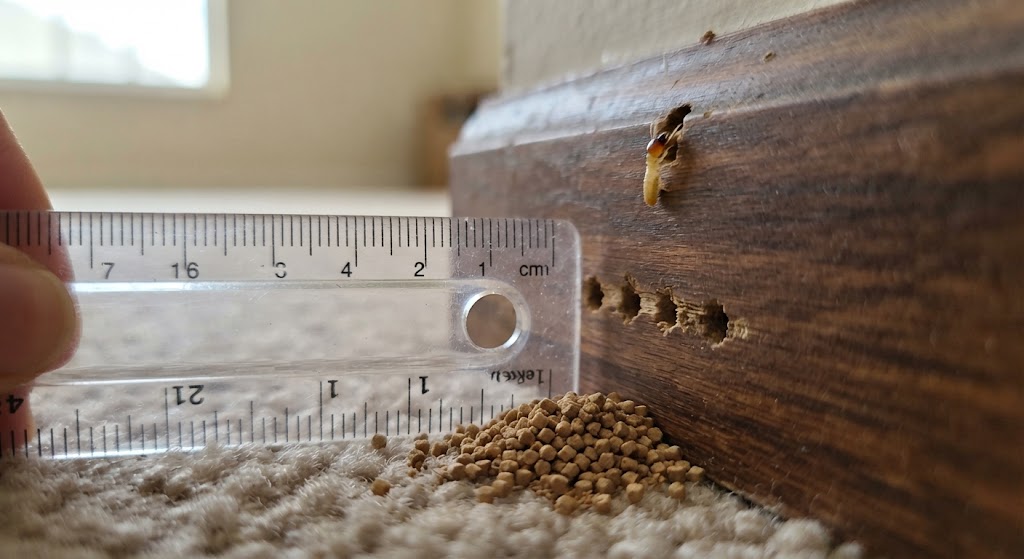
The telltale sign of a drywood infestation is the accumulation of six-sided fecal pellets, also called frass. They are tiny, hard, tan to reddish pellets about the size of a grain of salt, often in small piles that look like sawdust or coffee grounds below the wood. UF/IFAS suggests using a 20× smartphone magnifier to see the six-sided shape.
Termites push these pellets out through kickout holes in the wood. Look directly above a pellet pile to find the source. One caution: pellets can remain almost indefinitely from a dead colony, so old pellets do not always mean active termites.
How to Identify Subterranean Termite Activity
Subterranean termites need moisture and soil contact, so they build pencil-width mud tubes to travel from the ground into your home. Check slab edges, garage walls, plumbing penetrations, and the bottoms of door frames. Damaged wood often looks layered and is packed with soil.
Florida’s Invasive Subterranean Termites Are Spreading
Florida’s native subterranean termites are only part of the story. A University of Florida study found that two invasive species, the Formosan and Asian subterranean termites, are spreading farther north and into more communities than previously thought.
The Formosan subterranean termite has spread across most of Florida’s major cities from Miami to Jacksonville to the Panhandle. The Asian subterranean termite, once confined to South Florida, has been detected in multiple Central Florida cities from Tampa to Melbourne. Current trends suggest detection statewide before 2050.
These invasives build very large colonies and can infest living trees. Colonies of the Asian species can forage underground up to a hundred feet from the central nest before reaching structures.
Homeowners can check which species have been found near them using UF/IFAS’s public termite distribution map, and can submit samples to the UF/IFAS termite identification service.
When Termites Swarm in Florida
Swarms, or mating flights, are often the first sign homeowners notice. Look for clusters of winged insects or piles of discarded wings on windowsills.
| Species | Typical Swarm Season | Time of Day |
|---|---|---|
| Asian subterranean | Early March (South Florida) | Dusk |
| Formosan subterranean | Late April to early May | Night |
| Dark southeastern subterranean | March to June | Daylight |
| Light southeastern subterranean | December to April | Daylight |
| Tropical rough-headed drywood | April to July | Night |
| Tropical smooth-headed drywood | Any time, peak March to May | Afternoon |
Because Florida is warm and humid, different termite species swarm throughout the year, so do not assume you are safe in fall or winter. Termites are active year-round even when they are not swarming.
Drywood Termite Treatment Options
Drywood termites enter homes by swarming from infested trees, stored wood, or neighboring structures, or by riding in on infested furniture, cabinets, or flooring. The roof is a common entryway for a newly mated pair.
Spot or Localized Treatment
For a small colony confined to accessible wood, a professional may inject the galleries directly. Spot treatment only works when the inspector can find every infested area. Replacing infested trim or removing infested furniture can also solve small problems.
Tent Fumigation
Fumigation kills everything in the structure and acts as a “reset button” for drywood termites. Florida and California perform the most fumigations in the country. The trade-off: fumigation leaves no residual protection, so the home can be reinfested later. Occupants, pets, and plants must leave for several days.
Heat and Other Methods
State consumer guidance also lists spot heat, microwave, and liquid nitrogen treatments, and heat has been used for whole-structure treatment. These can be useful in specific situations but may not reach hidden colonies the way gas does.
Subterranean Termite Treatment Options
Liquid Soil Barrier
A contractor trenches around the foundation and treats the soil with a termiticide, creating a treated zone termites must pass through. Some guides estimate liquid barriers protect for roughly 5 years before retreatment is needed.
Bait Systems
In-ground bait stations are placed around the home. Termites carry the bait back to the colony, which can eliminate it over weeks. Bait systems require ongoing monitoring and an annual service fee.
Combined Approach
For Formosan or Asian subterranean termites, many professionals recommend combining a liquid barrier with a bait system, since these colonies are large and aggressive.
2026 Florida Termite Treatment Costs
| Treatment | Typical Florida Cost | Best For |
|---|---|---|
| Drywood spot treatment | $200–$1,000 | Small, localized colony |
| Liquid soil barrier | $800–$2,800 | Subterranean termites |
| Bait system install | $1,000–$4,000 + annual fee | Subterranean termites |
| Tent fumigation | $1,800–$3,800 typical | Widespread drywood |
Composite of published 2026 Florida pricing. Costs vary by home size and region.
For a typical 2,000-square-foot single-story Florida home, fumigation runs about $1,800 to $2,600. South Florida carries the highest drywood pressure and the highest tent fumigation prices in the state. Bait installation can also carry a $400 to $550 annual bond.
Florida Rules Every Homeowner Should Know
New Construction Pretreatment
The Florida Building Code requires treatment for subterranean termites on new construction but does not require preventive treatment for drywood termites. That means even a newer home has no built-in drywood protection.
WDO Inspection Reports
If you are buying or selling a home, the termite inspection is reported on FDACS Form 13645, the only legally recognized WDO report form for Florida real estate transactions. Only a company licensed by FDACS under Chapter 482 may perform the inspection. The report is a visual inspection of accessible areas only and does not certify that a home is free of termites.
Licensing
Termite treatment and fumigation in Florida must be done by licensed pest control companies. Verify the company’s FDACS license before signing a contract.
Prevention Checklist for Florida Homes
- Eliminate wood-to-soil contact. Keep mulch, firewood, and lumber away from the foundation.
- Fix moisture problems. Repair leaks, clear gutters, and direct downspouts away from the slab.
- Inspect secondhand wood items. Check furniture and cabinets for pellets before bringing them inside.
- Turn off outdoor lights during swarm season. Swarmers are attracted to light near windows and doors.
- Schedule an annual inspection. A licensed professional can catch activity in attics, garages, and crawl spaces you rarely see.
Brian’s Take
Termites are a balance-sheet issue for Florida homeowners, not just a pest problem. Termite damage is generally not covered by homeowners insurance, a WDO finding can complicate a home sale, and the invasive subterranean species now moving north into Tampa Bay and Central Florida raise long-term risk for markets that historically saw less pressure.
The most expensive mistake is treating the wrong termite. I would never sign a treatment contract without a clear species identification first. If a company recommends tenting, ask whether the evidence is drywood. If a company recommends a soil treatment, ask whether they found mud tubes or live subterranean termites. A legitimate pro will show you the evidence.
I would also read any termite bond carefully. Check what it covers: retreatment only or damage repair, which species are included, and what conditions void it. Some contracts exclude Formosan termites, which matters more every year as that species spreads.
October is a smart time to act. Swarm activity is lower, pest companies have more availability, and you can address problems before the spring swarm season.
Frequently Asked Questions
How do I get rid of drywood termites in Florida?
Small, localized drywood colonies can be treated by injecting termiticide into the infested wood or replacing the wood. Widespread or hidden infestations usually require whole-structure tent fumigation by a licensed fumigator.
What are signs of subterranean termite damage in Florida homes?
Look for mud tubes on slabs, foundation walls, and garage walls, soft or hollow-sounding wood, wood galleries packed with soil, and swarms of winged termites in spring.
What do drywood termite droppings look like?
They are tiny, hard, six-sided pellets about the size of a grain of salt, usually tan to reddish brown, often found in small piles under infested wood.
Does tenting kill subterranean termites?
No. Fumigation targets termites living inside the wood. Subterranean colonies live in the soil and require soil termiticides or bait systems.
How much does termite tenting cost in Florida?
A typical 2,000-square-foot single-story Florida home costs about $1,800 to $2,600 to fumigate, with South Florida and larger homes running higher.
Does Florida require termite treatment for new homes?
Yes, for subterranean termites. The Florida Building Code requires subterranean termite treatment on new construction but not drywood prevention.
Sources and Further Reading
- Termite Prevention and Control (ENY-2044) — UF/IFAS Ask IFAS: https://ask.ifas.ufl.edu/publication/IN1277
- Drywood and Dampwood Termites (ENY-211) — UF/IFAS EDIS: https://journals.flvc.org/edis/article/download/117299/115411
- Western Drywood Termite (EENY248) — UF/IFAS: https://ask.ifas.ufl.edu/publication/IN526
- Dampwood and Drywood Termites — Florida Department of Agriculture and Consumer Services: https://www.fdacs.gov/Consumer-Resources/Health-and-Safety/Protect-Your-Home-from-Pests/Termites/Dampwood-and-Drywood-Termites
- Consumer Information: Drywood Termites — FDACS: https://ccmedia.fdacs.gov/content/download/3145/file/p01742_consumerinfo_drywood_0910.pdf
- UF/IFAS Identification Tool Tracks the Spread of Invasive Termites — Pest Control Technology: https://www.pctonline.com/news/uf-scientists-track-the-spread-of-invasive-termites-for-pmps/
- Invasive Asian Subterranean Termite Spreading Across Florida — PMP: https://www.mypmp.net/invasive-asian-subterranean-termite-spreading-across-florida/
- UF/IFAS Scientists Confirm First Spread of Asian Subterranean Termites in Tampa — UF/IFAS News: https://blogs.ifas.ufl.edu/news/2023/03/23/uf-ifas-termite-scientists-confirm-first-spread-of-asian-subterranean-termites-in-tampa
- As Florida Enters Termite Swarm Season — UF/IFAS News: https://blogs.ifas.ufl.edu/news/2021/03/03/as-florida-enters-termite-swarm-season-uf-ifas-scientists-tell-consumers-what-to-know/
- Termites in Florida — UF/IFAS Fort Lauderdale Research and Education Center: https://flrec.ifas.ufl.edu/termites-in-florida/
- Termites in Florida: Types and Swarm Seasons — Orkin: https://www.orkin.com/locations/florida-fl/termites
- Signs & Treatment of Drywood Termites in Florida — Slug-A-Bug: https://slugabug.com/blog/diagnosing-a-drywood-termite-problem-in-your-home/
- What to Look for When Hiring a Pro for Termites — Pest Control Warrior: https://pestcontrolwarrior.com/pest-lab/hiring-a-pro/termites
- Florida Pest Control Cost: 2026 Statewide Price Guide — Pest Control Pricing: https://pestcontrolpricing.com/florida-pest-control-cost/
- Termite Treatment Cost in Florida (2026) — Termite Treatment Price: https://termitetreatmentprice.com/termite-treatment-cost-florida
- Florida WDO Inspections: FDACS Form 13645 — Yates Anderson: https://yatesanderson.com/library/florida-wdo-inspections-form-13645
- WDO Inspection in Florida: The Complete Guide — WDO Inspection Florida: https://wdoinspectionflorida.com/