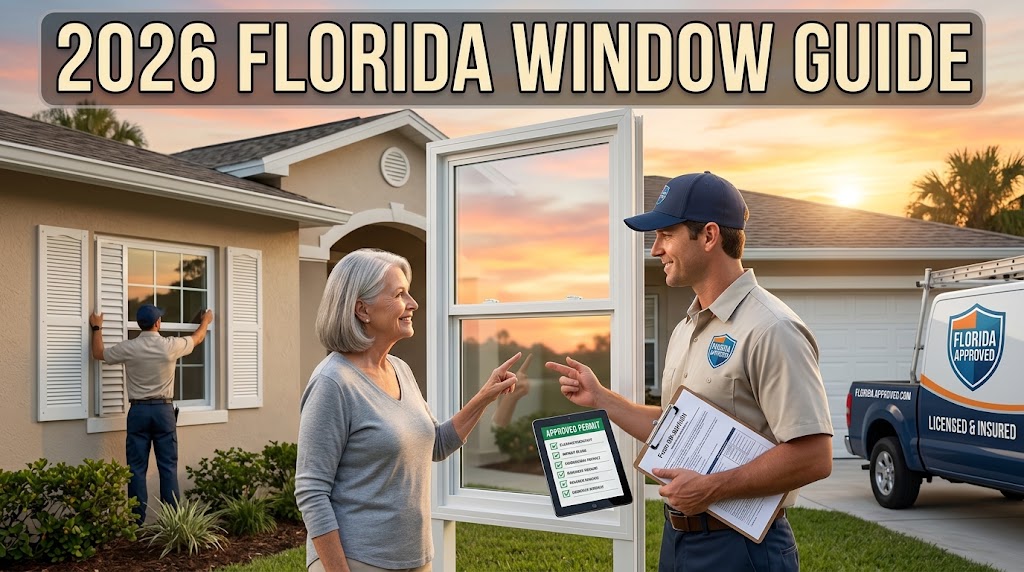
Quick Answer: In Florida, replacing home windows usually requires a building permit, a licensed contractor and products with Florida Product Approval. If your home sits in a wind-borne debris region, new windows must be impact-rated or protected by approved shutters. In 2026, a new state sales tax refund of up to $500 applies to qualifying impact windows, the federal energy tax credit for windows has ended, and the 9th Edition Florida Building Code takes effect December 31, 2026 for new permit applications.
Why Window Replacement Is Different in Florida
In most states, replacing a window is a comfort and energy decision. In Florida, it is also a structural and insurance decision. Windows are among the most vulnerable parts of a house in a hurricane. When a window or door fails, wind can pressurize the inside of the home and contribute to roof and wall damage.
That is why Florida regulates replacement windows more closely than almost anywhere else in the country. The rules come from four sources:
| Source | What It Controls |
|---|---|
| Florida Building Code | Wind pressure ratings, impact protection, installation, energy efficiency |
| Florida Product Approval system | Which window products may be installed in Florida |
| Local building departments | Permits, plan review and inspections |
| Insurance and state programs | Wind mitigation discounts, grants and tax refunds |
Understanding how these fit together helps homeowners avoid failed inspections, missed insurance savings and contractors who cut corners.
What Changed for Florida Windows in 2026
Four developments matter most for homeowners planning window projects this year.
1. A New Sales Tax Refund for Impact Windows
Florida created a temporary sales tax refund for home hardening products, including impact-resistant windows, doors and garage doors. According to Florida Department of Revenue guidance, the products must be installed in a site-built home with a just value of $700,000 or less. Mobile and manufactured homes are not eligible. The refund is capped at $500 and limited to one eligible property per owner.
The refund is not taken at the register. Homeowners apply after purchase using Form DR-26S and Form DR-26HH, with receipts showing Florida sales tax was paid. Claims are accepted from July 1, 2026, through September 30, 2029. Check the Department of Revenue’s Tax Information Publication on the program for the exact purchase window and requirements before you buy.
2. The Federal Window Tax Credit Is Gone
The federal Energy Efficient Home Improvement Credit, Section 25C, once let homeowners claim 30% of the cost of qualifying energy-efficient windows, up to $600 per year. The One Big Beautiful Bill Act, signed in July 2025, ended that credit for property placed in service after December 31, 2025. Windows installed in 2026 do not qualify. Windows installed by the end of 2025 can still be claimed on 2025 returns.
3. A New Building Code Arrives December 31, 2026
The 9th Edition (2026) Florida Building Code takes effect December 31, 2026. In Miami-Dade County, for example, permit applications and plans submitted on or after that date must comply with the new edition. Projects permitted before the effective date generally remain under the 8th Edition. Homeowners with projects in planning should ask their contractor which code edition their permit will fall under, since product approvals and documentation may need to match.
4. My Safe Florida Home Continues With Limited Funding
The state’s My Safe Florida Home program, which offers grants for impact windows, doors and other wind mitigation upgrades, has continued into 2026 using funds left over from prior appropriations. Lawmakers did not add significant new money this year. Funding has opened and closed repeatedly, so availability changes quickly.
Do You Need Impact Windows in Florida?
The answer depends on where your home is located.
Wind-Borne Debris Regions
The Florida Building Code requires protection of glazed openings in wind-borne debris regions. These are areas:
- Within 1 mile of the coastal mean high-water line where the ultimate design wind speed is 130 mph or greater, or
- Anywhere the ultimate design wind speed is 140 mph or greater, regardless of distance from the coast
All of Miami-Dade and Broward counties fall within the High-Velocity Hurricane Zone (HVHZ), which carries the strictest product testing requirements in the state.
Your Two Options in Debris Regions
| Option | How It Works | Pros | Cons |
|---|---|---|---|
| Impact-resistant windows | Laminated glass and reinforced frames rated to withstand debris impact | Always in place, no storm prep, security and noise benefits | Higher upfront cost |
| Non-impact windows plus approved shutters | Standard windows protected by rated shutters or panels | Lower window cost | Shutters must be deployed before every storm; storage and labor |
Either option can satisfy the code if the products are approved for your location. For insurance purposes, both can earn opening protection credits when all openings are protected.
Outside Debris Regions
Homes outside wind-borne debris regions are not required to have impact protection, but replacement windows must still meet design pressure requirements for wind load. Many inland homeowners choose impact windows anyway for storm protection, insurance credits, security and noise reduction.
Design Pressure: The Rating That Matters Most
Every window approved for Florida carries a design pressure (DP) rating, which describes how much wind pressure the window can resist. The required rating depends on:
- Your home’s wind speed zone
- Exposure category, such as open coastline vs. sheltered suburban terrain
- Building height
- Where the window sits on the wall, since corners face higher pressures
Your contractor or a design professional should calculate the required design pressures for each opening. A window with a rating that is too low will fail permit review or inspection. Ask to see the design pressure calculations and confirm each window’s rating meets or exceeds them.
Florida Product Approval and Miami-Dade NOAs
Windows sold for installation in Florida must have Florida Product Approval, or local product approval where allowed. Products approved for the HVHZ carry a Miami-Dade Notice of Acceptance (NOA), and products with NOAs are also considered Florida-approved.
How to Check a Product Approval
- Get the product approval number from your contractor’s quote.
- Look it up on the Florida Building Commission’s product approval system.
- Confirm the approval covers your installation type, such as wood frame or concrete block.
- Confirm the approved design pressures and impact ratings match your requirements.
- Confirm the approval is current for the code edition your permit falls under.
Product approvals include installation instructions, such as anchor type, spacing and embedment. Inspectors check installations against these instructions, so a correct product installed incorrectly can still fail.
Permits: What to Expect
Most Florida jurisdictions require a building permit to replace windows. Even like-for-like replacements generally need one because wind ratings, impact protection and installation methods must be verified.
Typical Permit Requirements
- Permit application, usually filed by the contractor
- Window schedule listing each opening, size and product
- Product approval documents
- Design pressure calculations
- Notice of Commencement for larger projects
- Proof of contractor license and insurance
Inspections
Many jurisdictions require at least one inspection during installation, often while anchors and fasteners are visible, and a final inspection. Do not let the contractor finish trim and stucco work that hides fasteners before a required inspection.
Why Permits Matter for You
An unpermitted window replacement can cause problems when you sell the home, file an insurance claim or request a wind mitigation inspection. Insurers and inspectors often look for permit records to verify opening protection. A permit is part of your proof.
Who Can Install Windows in Florida?
Window and door replacement is licensed work in Florida. Depending on the scope, it generally falls under state-certified or registered general, building or residential contractors, or specialty contractors such as glazing or structure specialty contractors.
Before signing:
- Verify the license on MyFloridaLicense.com and confirm it is current and active
- Confirm the license type covers window installation
- Ask for certificates of general liability and workers’ compensation insurance
- Confirm who will pull the permit and schedule inspections
- Ask whether installers are employees or subcontractors, and who supervises them
Be cautious of handymen or “window installers” without a state contractor license offering to replace windows without a permit. Unlicensed contracting is a crime in Florida and becomes a felony during a declared state of emergency.
Choosing Windows for Florida Homes
Frame Materials
| Frame | Florida Strengths | Considerations |
|---|---|---|
| Aluminum | Strong, slim profiles, widely used for impact windows | Conducts heat unless thermally improved |
| Vinyl | Better insulation, lower cost | Must be reinforced for high design pressures |
| Fiberglass | Strong, stable in heat | Higher cost, fewer impact options |
| Wood or clad wood | Traditional look | Moisture and termite exposure in Florida |
Glass Options
- Laminated impact glass uses a plastic interlayer that holds broken glass in place. It is the core of most impact windows.
- Low-E coatings reduce heat gain from sunlight, which matters more than heat loss in most of Florida.
- Insulated laminated glass combines impact protection with an insulating air or gas space for better energy performance.
- Tinted or reflective glass may be restricted by HOAs and condos, so check before ordering.
Energy Code Requirements
The Florida Energy Conservation Code sets limits on how much solar heat new windows can let in and how much heat they transfer. In Florida’s hot climate zones, the solar heat gain coefficient is often the most important number on the label. Your contractor’s window schedule and the product’s label should show that each window meets the energy code for your location.
Window Styles
Single-hung, horizontal rolling, casement, picture and sliding glass doors are all available in impact-rated versions. Casement windows typically seal tightly, while large picture windows and sliders often need higher design pressure ratings and stronger anchoring.
Bedroom Windows and Emergency Escape
Bedrooms typically require an emergency escape and rescue opening. When replacing bedroom windows, make sure the new windows still provide a code-compliant escape route. The building code includes specific provisions for replacement windows in these openings, so your contractor and permit reviewer should confirm compliance. Avoid fixed or undersized windows in sleeping rooms unless another compliant escape opening exists.
Insurance: How New Windows Can Lower Premiums
Florida law requires insurers to offer discounts for proven wind mitigation features. Opening protection is one of the main categories on the state’s wind mitigation inspection form, commonly called the 1802 form.
Getting the Credit
- Complete the window project and close the permit.
- Make sure all openings are protected, since the highest opening protection credits typically require protection of all glazed openings and, in many cases, doors, garage doors and skylights as well.
- Hire a qualified inspector to complete a new wind mitigation inspection.
- Send the report to your insurance agent and ask for the premium to be recalculated.
Common Mistakes
- Replacing windows but leaving the garage door or entry doors unprotected, which can limit the credit
- Losing product approval paperwork, which inspectors may need to verify ratings
- Not ordering a new wind mitigation inspection after the work is done
Ask your insurance agent before the project how much credit full opening protection would earn on your policy. The answer can help decide whether to include doors and the garage door in the same project.
Paying for Window Replacement in 2026
My Safe Florida Home Grants
The program, administered by the Florida Department of Financial Services, offers:
- A free wind mitigation inspection that identifies recommended upgrades
- Matching grants of up to $10,000, with the state paying $2 for every $1 the homeowner spends on approved improvements
- Grants of up to $10,000 without the matching requirement for eligible low-income applicants
Eligible homes must be site-built, owner-occupied single-family homes or townhouses with a homestead exemption. In the 2025-2026 cycle, eligibility was restricted to low- and moderate-income homeowners. Grants reimburse approved work; they do not pay contractors up front. Follow the program’s steps in order, including the initial inspection and approval, before starting work, or the project may not qualify.
Sales Tax Refund
Apply for the home hardening sales tax refund after purchase if your home qualifies. Keep receipts that show Florida sales tax paid on the windows.
Federal Credits
No federal energy credit is available for windows installed in 2026.
Financing Cautions
Some window companies offer financing through property-assessed programs or third-party lenders. Read terms carefully, compare interest rates and understand whether the financing creates a lien on your property.
Contracts, Deposits and Lien Protection
A good window contract should include:
- Contractor name, license number and insurance information
- Exact products, including product approval numbers and design pressure ratings
- Number, size and location of each window
- Permit responsibility
- Removal and disposal of old windows
- Repair of stucco, drywall, trim and paint
- Start date, estimated completion date and manufacturing lead time
- Payment schedule tied to milestones
- Warranty terms for products and installation
Deposit Rules
Custom impact windows often require deposits because they are made to order. Florida law does not cap residential contractor deposits, but if a contractor collects more than 10% of the contract price as an initial payment, it must apply for permits within 30 days and start work within 90 days after permits are issued, unless there is just cause or a written agreement for a longer period.
Lien Protection
Under Florida’s construction lien law, suppliers and subcontractors who are not paid can sometimes place liens on your property even if you paid the contractor. Protect yourself by:
- Watching for Notices to Owner from suppliers
- Requiring lien releases from the contractor and major suppliers before final payment
- Recording a Notice of Commencement when required
Condos and HOAs
Condominiums
Condo owners face extra layers of approval. Many condominium declarations make unit owners responsible for windows while the association sets specifications for appearance and hurricane protection. Before ordering:
- Read your declaration and rules for window and hurricane protection specifications
- Submit your plans for association approval
- Confirm frame color, glass tint and style requirements
- Ask whether the association has building-wide plans that could affect your project
Homeowners Associations
HOAs commonly regulate window frame color, grid patterns and glass tint. Florida law generally limits an HOA’s ability to prohibit hurricane protection, though associations may adopt reasonable specifications for its appearance. Get written architectural approval before ordering custom windows.
Older Homes and Lead Paint
Homes built before 1978 may contain lead-based paint on window frames and trim. Federal rules require contractors who disturb painted surfaces in these homes to be certified under the EPA’s Renovation, Repair and Painting program and to follow lead-safe work practices. Ask your contractor for proof of certification if your home was built before 1978.
Timing Your Project
Lead Times
Impact windows are typically made to order. Manufacturing and delivery can take weeks to months depending on demand, especially after storms. Permit review adds more time.
Hurricane Season
Hurricane season runs from June 1 through November 30. Many homeowners plan installations for late fall through spring to avoid having openings exposed during peak storm months. If work happens during hurricane season, ask the contractor how they will secure openings if a storm approaches mid-project.
The Code Change Deadline
With the 9th Edition taking effect December 31, 2026, homeowners planning projects near the end of the year should ask whether permits will be submitted before or after that date and whether product approvals and design calculations reflect the correct edition.
Step-by-Step Florida Window Replacement Checklist
- Check your wind zone. Confirm whether your home is in a wind-borne debris region or the HVHZ.
- Get a wind mitigation inspection. Use your current report or the My Safe Florida Home inspection to identify gaps.
- Check HOA or condo rules. Get specifications and submit for approval.
- Get at least three quotes. Compare products, ratings, warranties and scope, not just price.
- Verify licenses and insurance. Use MyFloridaLicense.com.
- Verify product approvals. Confirm design pressures and impact ratings.
- Review the contract. Include products, permit responsibility, payment schedule and cleanup.
- Confirm the permit is issued before installation begins.
- Track inspections. Make sure required inspections happen before finishes cover fasteners.
- Collect documents. Keep the permit, product approvals, invoices and lien releases.
- Order a new wind mitigation inspection and send it to your insurer.
- File for the sales tax refund if eligible.
Red Flags When Shopping for Windows
- Pressure to sign the same day for a “today only” price
- No license number on the quote or contract
- Vague product descriptions without approval numbers
- Offers to skip the permit to save money
- Requests for large cash deposits
- Promises of specific insurance savings that the contractor cannot guarantee
- Contractors who offer to waive your insurance deductible after storm damage, which is a crime in Florida
Brian’s Take
Florida homeowners are no longer choosing windows only for looks or energy bills. They are buying structural protection that can affect insurance premiums for as long as they own the home.
The biggest value in 2026 often comes from finishing the job rather than starting it. Replacing most windows while leaving the garage door or a slider unprotected can leave insurance credits on the table. A full opening protection project, documented with a permit and a new wind mitigation report, is what insurers reward.
The incentive picture has shifted. The federal credit is gone, the state sales tax refund is modest, and grant funding is limited and competitive. That makes careful bidding and paperwork more important than chasing incentives. The December 31 code change is worth watching for anyone with a project in the pipeline.
Frequently Asked Questions
Do I need a permit to replace windows in Florida?
In most Florida jurisdictions, yes. Window replacement generally requires a building permit because wind ratings, impact protection and installation methods must be verified.
Are impact windows required in Florida?
They are required, or approved shutters must be used, in wind-borne debris regions. These include areas within 1 mile of the coast where design wind speed is at least 130 mph and anywhere design wind speed is 140 mph or greater.
Is there a tax credit for replacing windows in 2026?
The federal Section 25C credit ended for windows placed in service after December 31, 2025. Florida offers a sales tax refund of up to $500 on qualifying impact windows for eligible homes.
How does the Florida impact window sales tax refund work?
Eligible homeowners pay sales tax at purchase, then apply to the Florida Department of Revenue using Forms DR-26S and DR-26HH with receipts. The home must be site-built with a just value of $700,000 or less, and the refund is capped at $500 per owner.
Can I get a grant for impact windows in Florida?
The My Safe Florida Home program offers grants up to $10,000 for eligible homeowners, subject to available funding, income eligibility and program requirements. Check the program’s website for current status.
Will new impact windows lower my insurance?
They can. Florida insurers must offer wind mitigation discounts. You will usually need a new wind mitigation inspection, and the largest credits typically require all openings to be protected.
Who can legally install windows in Florida?
Window replacement generally requires a state-certified or registered contractor whose license covers the work, such as a general, building or residential contractor or an appropriate specialty contractor.
What is a Miami-Dade NOA?
A Notice of Acceptance is a product approval issued for products tested to the High-Velocity Hurricane Zone standards that apply in Miami-Dade and Broward counties. Products with NOAs are also considered Florida-approved.
How does the 2026 building code change affect window projects?
The 9th Edition Florida Building Code takes effect December 31, 2026. Permit applications submitted on or after that date generally must comply with the new edition.
How long does window replacement take in Florida?
Timelines vary with product lead times, permit review and inspection scheduling. Custom impact windows often take weeks to months from order to installation.
Sources and Further Reading
- Florida Home-Hardening Sales Tax Refund, Tax Information Publication No. 26A01-09 summary, Sales Tax Institute
- Florida Department of Revenue, Home Hardening Products Sales Tax Refund Guidance and Forms DR-26S and DR-26HH
- Florida Building Code 8th Edition (2023) Annual Technical Amendment: Wind-Borne Debris Region Definition, Florida Building Commission
- 9th Edition (2026) Florida Building Code Workplan and Product Approval Presentation, Florida Building Commission
- Florida Building Code 9th Edition Code Change Notice, Miami-Dade County Permitting and Inspection Center
- Florida Adopts New Building Codes, ICC-NTA
- Florida Building Code Resource Guide, PGT Innovations
- Florida Building Code and Product Approvals, Florida Roofing and Sheet Metal Contractors Association
- What Section 70505 Ended for the 25C Home Energy Credit, Instead
- Energy Efficient Home Improvement Credit Fact Sheet, Building Performance Association
- My Safe Florida Home Program Has Money Left From Last Year to Keep Grants Flowing in 2026, WFLX
- My Safe Florida Home Reopens With $352M in Funds and New Eligibility Requirements, WLRN
- Contractor Licensing Updated Guidance (HB 735), City of Port St. Lucie Building Department
- Florida Statutes Section 489.126, Moneys Received by Contractors, The Florida Senate
- Florida Statutes Chapter 713, Construction Liens, The Florida Senate