By Brian French | Florida Home Services News | October 4, 2026
Quick Answer
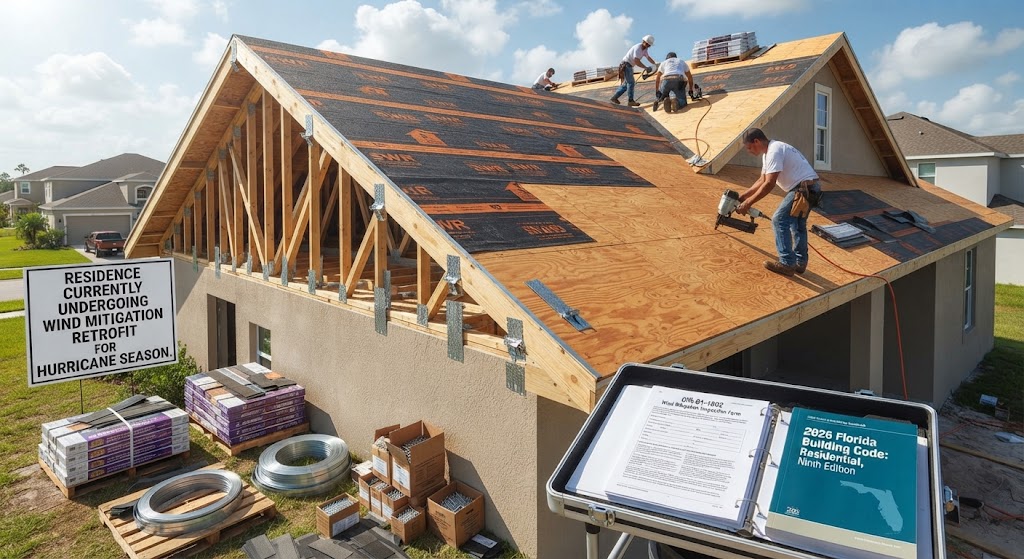
To hurricane-proof a Florida roof, get a wind mitigation inspection, secure the roof to the walls with clips or straps, brace gable ends, and add a sealed roof deck at your next re-roof. Keep paperwork for every upgrade, because insurers reward documented mitigation.
Why Roof Prep Matters More Than Ever in Florida
In Florida, the roof decides two things: whether your home survives a storm, and whether you can keep it insured at a workable price. A roof that loses its covering lets water in, and water damage often costs more than the wind damage itself. Insurers know this, so roof condition now sits at the center of underwriting, pricing, and renewal decisions across the state.
With hurricane season running through November 30, and a new building code coming at year-end, October is a smart time for homeowners to take stock of their roofs and plan upgrades for 2027.
The 5-Step Florida Roof Hurricane Checklist
- Confirm your roof’s real age. Pull the roofing permit from your county or city records. For insurance, roof age is measured from the last date on which 100 percent of the roof’s surface area was built or replaced in accordance with the building code in effect at that time.
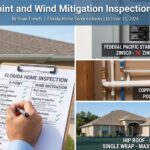
- Get a wind mitigation inspection. A licensed inspector documents your roof’s wind-resistant features on the state’s standard form. This is your baseline and your discount ticket.
- Strengthen the roof-to-wall connection. Upgrade from toe-nails to metal clips, single wraps, or double wraps where feasible.
- Brace gable ends and seal the deck. Gable bracing reduces wall failure risk; a sealed roof deck (SWR) limits water intrusion if shingles or tiles blow off.
- Document and submit. Send the updated inspection report to your insurance agent and keep permits, photos, and invoices in one file.
What a Wind Mitigation Inspection Checks
The inspection is recorded on a standard wind mitigation form, OIR-B1-1802, commonly referred to as the 1802 form. Florida Statute 627.0629(1) requires every property insurer in the state to offer discounts when a homeowner documents qualifying mitigation features on the form. The form is valid for up to 5 years, provided that no material changes have been made to the structure.
| Feature | What Inspectors Look For | Credit Impact |
|---|---|---|
| Building code year | Permit date of construction | Highest |
| Roof shape | Hip roof vs. gable | High |
| Roof-to-wall | Toe-nails, clips, single or double wraps | High |
| Opening protection | Rated shutters or impact glass | High |
| Roof covering | Code-compliant permit date | Medium |
| SWR | Sealed membrane under covering | Medium |
| Deck attachment | Nail size and spacing | Low |
Credit impact is relative and varies by carrier. As one reference point, a Florida inspector’s published averages put the average discount for secondary water resistance at 8% of the windstorm part of the premium, though it varies, sometimes significantly, between insurers. The same analysis lists up to 35% for metal clips, single-wraps, or double-wraps at the roof-to-wall connection and up to 5% for roof deck attachment, with 2-1/2″ nails spaced at 6″ on center earning the best discount. Ask your agent what your specific report qualifies for.
Retrofit Upgrades That Matter Most
Roof-to-Wall Clips and Straps
Hurricane winds create uplift that tries to peel the roof structure off the walls. Inspectors check for hurricane straps or clips, metal connectors that strap the roof trusses to the wall structure, with clips, single wraps, and double wraps as the common types. Double wraps provide the strongest connection. Retrofitting is easiest during a re-roof, when the edge of the deck is open and installers can reach the truss ends.
Gable End Bracing
Gable roofs have flat triangular end walls that act like sails in high wind. If a gable wall collapses inward, the roof and interior can fail quickly. Bracing ties the gable framing back into the ceiling and roof structure. Florida’s existing-building rules can require mitigation work like this during a re-roof on some older homes, so ask your contractor and building department what applies to your property.
Secondary Water Resistance (Sealed Roof Deck)
SWR is a sealed peel-and-stick membrane under the roof covering that limits water intrusion if shingles are lost. It is one of the most cost-effective additions you can make, but it only makes sense when the old covering is coming off anyway. If your roof is due for replacement in the next few years, plan for SWR now.
Roof Deck Attachment
Inspectors look at how the plywood or board sheathing is fastened to the trusses. A new roof installed under current code typically brings the deck up to modern nailing standards, which is one more reason a re-roof is the best moment to upgrade everything at once.
The Florida Roof Rules Every Homeowner Should Know
The 15-Year Roof Age Rule
Under Florida law, an insurer may not refuse to issue or renew a homeowner’s policy solely because of roof age when the roof is less than 15 years old. If the roof is at least 15 years old, the insurer must let you pay for an inspection by an authorized inspector before it can require roof replacement as a condition of coverage, and it may not refuse solely because of roof age if that inspection shows 5 or more years of useful life remaining.
The 25% Repair Rule
If an existing roofing system was built, repaired, or replaced in compliance with the 2007 Florida Building Code or any later edition, and 25 percent or more of it is being repaired, replaced, or recovered, only that portion is required to meet the code in effect. The 2007 edition officially went into effect on March 1, 2009. On an older roof, crossing 25 percent of a section pulls that whole section up to current code, which is how a storm repair becomes a re-roof.
| Roof Installed | Storm Damage Over 25% | Likely Outcome |
|---|---|---|
| Before March 1, 2009 | Yes | Full section to current code |
| March 1, 2009 or later | Yes | Repair damaged portion only |
The New Building Code Deadline
The 8th Edition (2023) has been the enforced statewide standard since December 31, 2023 and remains so today. The 9th Edition Florida Building Code: Residential updates it using the latest changes to the 2024 International Residential Code, with an effective date of December 31, 2026. Under FBC §105.3, the edition in effect on the date the permit application was submitted governs the permitted work for the life of the permit. Homeowners already planning a re-roof should talk with their contractor now about which edition their project will fall under.
Paying for It: My Safe Florida Home
The state’s hardening program can offset retrofit costs. My Safe Florida Home is run by the Florida Department of Financial Services and gives homeowners a free wind mitigation inspection and grants of up to $10,000 toward hurricane-hardening upgrades. The grant operates on a 2:1 match: for every dollar you put toward eligible improvements, the state contributes two dollars, up to a maximum state contribution of $10,000.
Eligibility is narrower than in earlier years. It is now restricted to low-income and moderate-income homesteaded owners. On funding, the Memorial Day 2026 budget reappropriated more than $405 million across the program and the My Safe Florida Condo Pilot, largely to clear a backlog of completed inspections still waiting on grant awards. Confirm live status at mysafeflhome.com before building a project timeline around a grant.
Pre-Storm Roof Walk: 10-Minute Version
When a storm is in the forecast, do a quick visual check from the ground or with binoculars:
- Missing, lifted, or cracked shingles or tiles
- Loose flashing around vents, chimneys, and skylights
- Clogged gutters and downspouts
- Tree limbs overhanging the roof
- Loose satellite dishes, solar mounts, or rooftop equipment
- Interior ceiling stains that signal an existing leak
Do not climb onto the roof during storm prep. Call a licensed roofer for anything beyond a visual check.
Brian’s Take
The roof is now the single most important financial asset on a Florida home, not just a structural one. It sets your insurance premium, decides whether a carrier will renew you, and determines how a storm claim gets settled.
Two timing signals stand out this fall. First, the 9th Edition code arrives December 31, and permit application date controls which rules apply, so homeowners with a re-roof on the calendar should make a deliberate decision about timing with their contractor rather than drifting past the deadline. Second, state grant money exists but is targeted and backlogged, so the homeowners who benefit will be the ones who have their inspection and paperwork ready.
The practical playbook is simple: know your roof’s permit date, get the 1802 inspection, and bundle clips, gable bracing, and SWR into your next re-roof. Each upgrade does double duty, protecting the house and lowering the cost of insuring it.
Frequently Asked Questions
What do I need to do to hurricane-proof my roof in Florida?
Start with a wind mitigation inspection, then upgrade roof-to-wall connections to clips or straps, brace any gable ends, and add a sealed roof deck when you re-roof. Submit the updated inspection to your insurer for credits.
How do I know if my Florida roof meets wind mitigation standards?
Hire a licensed inspector to complete the OIR-B1-1802 form. It records your roof shape, deck attachment, roof-to-wall connection, secondary water resistance, opening protection, and building code year.
How long is a wind mitigation report good for?
Up to five years, as long as no material changes have been made to the home. A new roof is a material change, so get a fresh inspection afterward.
Can my insurer drop me because my roof is old?
Not solely for age if the roof is under 15 years old. At 15 years or older, you can pay for an inspection, and if it shows at least five years of useful life remaining, the insurer cannot refuse coverage based on age alone.
Does the new 2026 building code affect my roof?
Only if you permit new roofing work. The 9th Edition takes effect December 31, 2026, and the permit application date determines which edition applies.
Can I get a state grant for roof upgrades?
Possibly. My Safe Florida Home offers free inspections and matching grants up to $10,000 for eligible low- and moderate-income homesteaded owners, subject to available funding.
Sources and Further Reading
- Florida Statute 627.7011 summary — OceanPoint Claims: https://oceanpoint.claims/resources/florida-statutes/627-7011-valued-policy-replacement-cost/
- Roof Age and Florida Homeowners Insurance (2026) — RoofCostFlorida: https://roofcostflorida.com/roof-age-and-insurance
- How Long Does a Roof Last in Florida? (Section 553.844 and the 25% rule) — Hayward Roof Pros: https://www.haywardroofpros.com/blog/how-long-does-a-roof-last-in-florida/
- Florida Roof Insurance Requirements: 2026 Guide — Lewis Insurance: https://lewisinsurance.com/blog/florida-roof-insurance-requirements-your-2026-complete-guide
- 2026 Florida Building Code, Residential, Ninth Edition — ICC Digital Codes: https://codes.iccsafe.org/content/FLRC2026V1.0
- 2026 Florida Building Code Changes: What Is Known So Far — Alliance Permitting: https://alliancepermitting.com/blogs/2026-florida-building-code-changes
- Windstorm Inspection (OIR-B1-1802 overview) — Wikipedia: https://en.wikipedia.org/wiki/Windstorm_inspection
- Wind Loss Mitigation Guide, OIR-B1-1802 (Rev. 04/26) — Citizens Property Insurance: https://training.citizensfla.com/lms/courses/core/CIS_Resources/Job_Aids/PolicyCenter/Wind_Loss_Mitigation_Guide_Rev0426.pdf
- Secondary Water Resistance Discount on the OIR-B1-1802 — How To Look At A House: https://www.howtolookatahouse.com/Blog/Entries/2020/9/what-is-the-discount-for-secondary-water-resistance-swr-on-a-wind-mitigation-inspection-report-oir-b1-1802.html
- Florida Wind Mitigation Credits: 2026 Form Guide — Fuller: https://fuller.insure/blog/wind-mitigation-credits-florida/
- Wind Mitigation Inspections (Jacksonville) — NEXGEN Roofing: https://www.nexgenfl.com/blog/wind-mitigation-inspection-jacksonville-fl
- What Are Wind Mitigation Credits? — Comegys Insurance: https://www.comegys.com/what-are-wind-mitigation-credits/
- My Safe Florida Home Program 2026: Grants, Eligibility, and Status — Latent Insure: https://www.latentinsure.com/florida-homeowners-insurance/my-safe-florida-home
- How Much Grant Money Can You Get from My Safe Florida Home in 2026? — Storm Smart: https://www.stormsmart.com/my-safe-florida-home-program/how-much-grant-money-my-safe-florida-home/
- My Safe Florida Home Program: Is It Still Funded in 2026? — Guardian Shield Windows: https://guardianshieldwindows.com/my-safe-florida-home-program-2026-funding-status/
- My Safe Florida Home official portal: https://mysafeflhome.com