September 2026
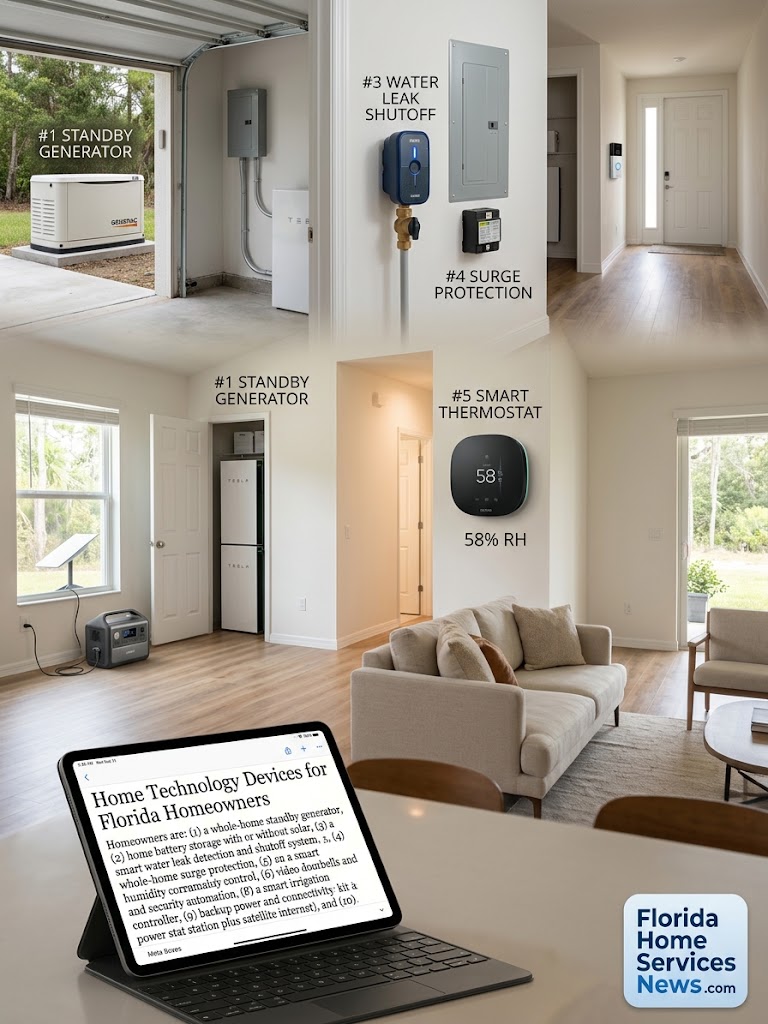
Quick Answer: The best home technology for Florida isn’t the same list you’d see in a national roundup — it’s shaped by hurricanes, lightning, humidity, and insurance math. The ten highest-value devices for Florida homeowners are: (1) a whole-home standby generator, (2) home battery storage with or without solar, (3) a smart water leak detection and shutoff system, (4) whole-home surge protection, (5) a smart thermostat with humidity control, (6) video doorbells and security cameras, (7) pool automation, (8) a smart irrigation controller, (9) backup power and connectivity kit (portable power station plus satellite internet), and (10) smart locks and garage door control. Several of these can lower insurance premiums or prevent the water and surge claims that drive Florida’s loss statistics.
Editor’s note: Product categories, example brands, and price ranges reflect the market as of publication and are editorial picks, not paid placements. Prices are directional estimates — verify current pricing, and confirm any insurance discount with your own carrier before buying.
Why is Florida’s home tech list different from everyone else’s?
Four state realities reorder the priorities. Power fails here — hurricanes and daily summer storms make outage protection the top spend rather than a luxury. Florida is the lightning capital of the U.S., which makes surge protection a genuine appliance-saver. Water is the enemy indoors and the obligation outdoors — plumbing leaks are among the most common homeowner claims, while irrigation is regulated by year-round watering restrictions. And insurance is the state’s silent co-buyer: several devices on this list can earn premium credits or prevent the claims that get policies non-renewed.
What are the top 10 home technology devices for Florida homeowners?
| Rank | Device | Typical Cost (est.) | The Florida Case |
|---|---|---|---|
| 1 | Whole-home standby generator | $10,000–$20,000+ installed | Days-long outages after storms; keeps AC on |
| 2 | Home battery storage (± solar) | $10,000–$25,000+ | Silent backup, no fuel, pairs with solar |
| 3 | Smart leak detection & shutoff | $500–$2,500 installed | Water claims lead FL loss stats; insurer discounts |
| 4 | Whole-home surge protector | $300–$900 installed | #1 lightning state; protects AC and appliances |
| 5 | Smart thermostat w/ humidity control | $130–$350 | Humidity, mold prevention, cooling costs |
| 6 | Video doorbell & security cameras | $100–$1,500+ | Security plus storm documentation for claims |
| 7 | Pool automation system | $1,000–$3,500+ | 1.5M+ FL pools; pump schedules cut power bills |
| 8 | Smart irrigation controller | $150–$400 | Watering restrictions; rain-skip compliance |
| 9 | Portable power station + satellite internet | $500–$3,500 | Post-storm phone, medical, and connectivity lifeline |
| 10 | Smart locks & garage control | $150–$600 | Vacation homes, rentals, and snowbird remote management |
1. Whole-home standby generator
The king of Florida home tech. A permanently installed generator (Generac and Kohler dominate the category) on natural gas or propane starts automatically when the grid drops and can carry the whole house — including central AC, the thing portable generators usually can’t. After every major hurricane, install waitlists stretch for months; buying in the off-season is the move. Requires permits, a licensed electrician and gas contractor, and a transfer switch — this is not a DIY category.
2. Home battery storage (with or without solar)
The modern alternative or complement to the generator: wall-mounted batteries (Tesla Powerwall, Enphase, and similar systems) provide silent, fuel-free backup and daily solar self-consumption if paired with panels. Batteries won’t run everything for days the way a gas generator can, but they bridge shorter outages, keep refrigerators, internet, and medical devices alive, and start instantly. Florida’s solar economics shifted after federal incentive changes — run the math on backup value, not just energy savings.
3. Smart water leak detection and automatic shutoff
The unsung hero of the list. Systems like Moen Flo and Phyn mount on the main line, learn the home’s water fingerprint, detect anomalies from a burst supply line to a silent toilet leak, and shut the water off automatically — including while you’re away for the summer, which is exactly when snowbird catastrophes happen. Non-weather water damage is one of Florida’s most common and expensive claim types, and a growing number of carriers offer discounts or even require shutoff devices on higher-value homes.
4. Whole-home surge protection
Florida leads the nation in lightning strikes, and a $50 power strip does not protect a $12,000 AC condenser or a house full of GFCI outlets and smart devices. A whole-home surge protective device installed at the panel by an electrician is one of the cheapest insurance policies in home tech — often a few hundred dollars to shield tens of thousands in electronics and appliances. Pair panel-level protection with point-of-use protectors on the most expensive electronics for layered defense.
5. Smart thermostat with humidity control
In Florida the thermostat’s second job matters as much as the first: humidity. Models with dehumidification logic (Ecobee, Nest, and Honeywell’s higher trims) can run the system to pull moisture without overcooling, protecting the home against the mold and musty-closet problems endemic to the climate — and they pay for themselves on cooling costs in a 10-month AC season. Many Florida utilities have offered rebates or demand-response credits for connected thermostats; check your utility’s program.
6. Video doorbell and security cameras
Standard equipment nationally, with two extra Florida jobs: documenting storm damage with timestamped footage (adjusters love before/after evidence) and watching property remotely during evacuations and seasonal absences. Battery-with-solar camera options keep recording through outages; pair with a UPS on the router — or item #9 — so footage still uploads when the grid is down.
7. Pool automation
With well over a million residential pools in the state, this is the most Florida category on the list. Automation systems from Pentair and Hayward schedule variable-speed pumps into cheap and quiet hours, manage salt chlorination and heaters, and flag equipment faults from an app. The economics are real: pump scheduling alone can cut hundreds of dollars a year in electricity, and remote chemistry monitoring saves the green-pool surprise after two weeks away.
8. Smart irrigation controller
Nearly all of Florida lives under year-round watering restrictions that vary by county and even by address. Smart controllers (Rachio and similar) skip cycles when rain is coming, adjust to season and soil, and can be programmed to your district’s allowed days — which both saves water and avoids code-enforcement letters. Many Florida water management districts and utilities have offered rebates for EPA WaterSense-labeled controllers.
9. Backup power station and satellite internet kit
The post-storm lifeline tier: a portable power station (EcoFlow, Jackery, Anker class) keeps phones, medical devices, fans, and the refrigerator’s compressor cycling when the whole-home options above aren’t in budget — with no carbon-monoxide risk indoors, the tragedy that follows every Florida hurricane when gas generators run in garages. Add a satellite internet terminal (Starlink class) or a charged cellular hotspot and the household stays connected for insurance claims, FEMA applications, and family check-ins when cell towers are down.
10. Smart locks and garage door control
The remote-management layer that ties it together, disproportionately valuable in a state full of vacation rentals, seasonal residents, and hurricane evacuations: issue codes to contractors and guests, confirm the house is locked from three states away, and get an alert if the garage — the most commonly forgotten opening — is standing open with a storm inbound. (One caution: the garage door itself is a structural hurricane vulnerability; a smart controller doesn’t substitute for a wind-rated door and bracing.)
Which devices can lower Florida insurance premiums?
Directionally, in descending order of impact: water leak shutoff systems (explicit discounts from a growing list of carriers, sometimes required), monitored security systems (long-standing credits), and standby generators and surge protection (fewer formal discounts, but they prevent the claims and non-renewals that cost far more than premiums). None of these substitute for the big structural credits — roof shape, opening protection, and wind mitigation — but the leak-shutoff discount in particular has become meaningful. Always confirm with your carrier in writing before buying for the discount.
What should Florida homeowners buy first on a budget?
If the budget is under $500: whole-home surge protector, smart thermostat, and a basic leak sensor kit. Under $2,500: add the automatic water shutoff and a portable power station. The big decision tier: generator versus battery storage — gas generator if you need days of full-house runtime and have gas service; battery if you value silence, no fuel logistics, and solar pairing. Everything else on the list is quality-of-life and can wait for sales.
Brian’s Take
Brief remarks from our columnist:
“Everybody buys the doorbell first because it’s ninety-nine bucks and it’s fun. Wrong order. In this state you buy against the three things that actually ruin Florida homeowners: water, lightning, and darkness. The $600 water shutoff prevents the claim that gets you non-renewed, the $400 surge protector saves the AC compressor, and the generator decision is really a question of how many August nights you’re willing to sleep at 88 degrees. Here’s my test for any gadget pitched to a Florida homeowner: what does it do on day three after landfall, on battery, with no Wi-Fi? If the answer is ‘nothing,’ it’s a toy. Buy the boring stuff first — the fun stuff will still be on sale in November.”
FAQ
Do smart home devices work during power outages? Only with backup power. Battery-powered devices (locks, some cameras) keep working locally; anything cloud-dependent needs the router alive — put the modem and router on a UPS or power station, and remember most cable internet dies with the grid anyway, which is the case for the satellite backup.
Is a generator or battery backup better for Florida? Gas standby generator for multi-day, whole-house runtime including AC; battery for silent short-to-medium outages, no fuel, and solar pairing. Households with medical needs or work-from-home requirements increasingly run both: battery for the first hours, generator for the long haul.
Do I need permits for any of this? Yes for the serious tier: standby generators, battery/solar systems, whole-home surge protectors, and automatic water shutoffs on the main line typically require permits and licensed trades in Florida. Plug-in and battery devices don’t.
Will my insurance really give a discount for a leak shutoff device? Many Florida carriers now do, and some require professional installation and proof of the device to apply it. The discount varies — get it confirmed in writing from your carrier, not the device marketing page.
Are these devices safe from hackers? Reasonably, with basics: unique passwords, two-factor authentication on every account, automatic firmware updates, and a router with WPA3. Buy from established brands that ship security patches; the risk lives mostly in abandoned no-name devices.
What about hurricane shutters and impact windows — aren’t those ‘home tech’? They’re the structural layer, and they outrank everything on this list for protection and insurance credits. This guide covers the devices layer; treat wind mitigation as its own (bigger) project.
Resources
- FEMA — generator and carbon monoxide safety: https://www.fema.gov
- Florida Division of Emergency Management — hurricane preparedness: https://www.floridadisaster.org
- EPA WaterSense — irrigation controller standards and rebates: https://www.epa.gov/watersense
- Florida’s water management districts (watering restrictions): https://www.sjrwmd.com, https://www.swfwmd.state.fl.us, https://www.sfwmd.gov
- My Safe Florida Home (wind mitigation, the structural layer): https://mysafeflhome.com
- Florida DBPR — verify electricians, plumbers, and contractors: https://www.myfloridalicense.com
- CISA — securing smart home devices: https://www.cisa.gov
- NFPA — home electrical and generator safety: https://www.nfpa.org
- Florida Public Service Commission — utility rebate and demand-response programs: https://www.floridapsc.com
Prices, features, and insurance treatments are editorial estimates as of publication and change frequently. Verify current pricing, permit requirements, and any premium discount with licensed professionals and your carrier before purchasing.